
Hut 8 diversification into AI and HPC 2025: Strong Finish
📝 Executive Summary (In a Nutshell)
- Hut 8 achieved a strong financial finish in 2025, notably outperforming many Bitcoin mining peers.
- This success was primarily driven by strategic diversification into the high-growth sectors of Artificial Intelligence (AI) and High-Performance Computing (HPC).
- Key major deals and significant credit expansions in these new verticals were instrumental in underpinning Hut 8's robust performance, effectively mitigating the challenges faced by the traditional Bitcoin mining industry.
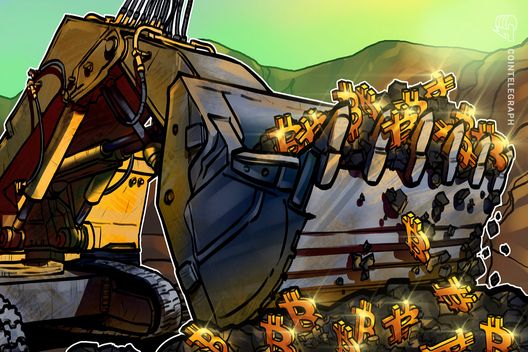
Hut 8's Resilient 2025: A Deep Dive into AI & HPC Diversification
The year 2025 presented a turbulent landscape for Bitcoin miners, marked by persistent market volatility, increasing operational costs, and the intensifying pressures of network difficulty adjustments and the lingering effects of the Bitcoin halving. Many industry players struggled to maintain profitability, facing significant headwinds that challenged traditional mining models. Amidst this challenging environment, Hut 8, a prominent digital asset miner, emerged as a beacon of resilience, concluding 2025 with a strong performance that defied broader industry trends. This impressive outcome was not a stroke of luck but the direct result of a calculated and prescient strategic pivot: aggressive diversification into the burgeoning fields of Artificial Intelligence (AI) and High-Performance Computing (HPC).
Hut 8's foresight in expanding beyond solely Bitcoin mining proved to be its definitive advantage. By actively pursuing major deals and securing crucial credit expansions within the AI and HPC sectors, the company successfully cultivated alternative, high-growth revenue streams. This strategic shift not only provided a robust buffer against the vagaries of the crypto market but also positioned Hut 8 as a diversified technology infrastructure provider, ready to capitalize on the next wave of digital transformation. This comprehensive analysis will delve into the intricacies of Hut 8's 2025 strategy, examining the challenges faced by Bitcoin miners, the rationale behind Hut 8's diversification, the specific ventures into AI and HPC, and the implications for its financial strength and future trajectory.
Table of Contents
- The Difficult Landscape for Bitcoin Miners in 2025
- Hut 8's Strategic Pivot: Diversification into AI and HPC
- Unpacking Hut 8's AI and HPC Ventures in 2025
- Analyzing Hut 8's Strong 2025 Performance
- The Future: Bitcoin Mining, AI, and HPC Synergy
- Conclusion
The Difficult Landscape for Bitcoin Miners in 2025
The year 2025 was a crucible for Bitcoin miners, testing the limits of operational efficiency and financial resilience. Several macroeconomic and industry-specific factors converged to create a particularly arduous operating environment, distinguishing the adaptable from the vulnerable.
Halving Impact and Market Volatility
Following the Bitcoin halving event (likely in late 2024 or early 2025), the block reward for miners was cut in half, instantly reducing their primary revenue source by 50%. This structural change necessitated a dramatic improvement in operational efficiency for miners to maintain profitability. Simultaneously, the broader cryptocurrency market experienced its characteristic volatility. While periods of price surges offered temporary relief, prolonged bear markets or extended periods of price stagnation exacerbated the halving's impact, squeezing profit margins to critical levels. Miners who had not prepared adequately, either through modernizing their fleets or securing cheap energy, found themselves in precarious positions. The market's unpredictable swings made long-term planning exceptionally difficult, forcing many to consider scaling back operations or even exiting the market entirely.
Rising Energy Costs and Operational Challenges
Beyond market dynamics, the operational side of Bitcoin mining faced its own set of challenges. Energy costs, always a critical factor, saw significant increases in many regions due to geopolitical tensions, inflation, and growing demand on power grids. For an energy-intensive industry like Bitcoin mining, even minor fluctuations in electricity prices could turn a profitable operation into a loss-making one. Furthermore, network difficulty continued its upward trend, meaning miners needed ever more computational power to earn the same amount of Bitcoin. This required constant investment in new, more efficient ASIC hardware, placing significant capital expenditure demands on companies already grappling with reduced revenues. Maintenance, cooling, and personnel costs also steadily climbed, creating a perfect storm of rising expenses against a backdrop of shrinking income. Companies with older, less efficient hardware or those tied to less favorable energy contracts bore the brunt of these pressures, making survival contingent on drastic strategic changes or superior financial backing.
Hut 8's Strategic Pivot: Diversification into AI and HPC
Recognizing the inherent cyclicality and increasing competitiveness of Bitcoin mining, Hut 8 embarked on a bold and prescient strategy to diversify its revenue streams. This pivot was not merely a reaction to challenging market conditions but a proactive move to build a more robust, future-proof business model. The company's leadership identified Artificial Intelligence (AI) and High-Performance Computing (HPC) as key growth vectors, leveraging its existing infrastructure and technical expertise.
The Vision Behind AI and HPC
Hut 8's foray into AI and HPC was rooted in a clear vision: to transform from a pure-play Bitcoin miner into a diversified digital infrastructure provider. The rationale was multi-faceted. Firstly, both AI and HPC require massive computational power, specialized hardware (like GPUs), and significant cooling capabilities – resources that Bitcoin mining infrastructure already possesses or can be adapted for. This meant that Hut 8 could repurpose or expand its existing data center facilities with relatively lower marginal costs compared to a new entrant. Secondly, the demand for AI and HPC services, encompassing everything from machine learning model training and big data analytics to scientific research and rendering, is experiencing exponential growth across industries. This presented an opportunity to tap into a much larger, more stable, and less volatile market than cryptocurrency mining. By offering these services, Hut 8 aimed to create recurring, enterprise-grade revenue streams that would complement, and in difficult times, de-risk its Bitcoin mining operations. The synergy was clear: leverage energy infrastructure and data center expertise to serve the computational demands of the future.
Advantages of a Hybrid Business Model
The adoption of a hybrid business model, combining Bitcoin mining with AI/HPC services, conferred several distinct advantages upon Hut 8. Perhaps the most significant was enhanced financial stability. The predictable revenue from long-term AI/HPC contracts provided a counterbalance to the often-unpredictable fluctuations in Bitcoin's price and mining profitability. This allowed for more consistent cash flow, better capital allocation, and reduced exposure to crypto market downturns. Moreover, the hybrid model offered operational flexibility. In periods where Bitcoin mining became less profitable due to low prices or high difficulty, resources could potentially be reallocated towards higher-margin AI/HPC workloads, optimizing infrastructure utilization. Conversely, during periods of high Bitcoin prices, the company could ramp up mining operations. This dynamic allocation of resources ensured that Hut 8 could maximize profitability across different market cycles. Furthermore, this diversification enhanced Hut 8's appeal to a broader investor base, including those traditionally wary of the volatile cryptocurrency sector, positioning it as a technology company with diverse growth engines rather than just a niche miner. For more insights into emerging tech trends, check out this article on TooWeeks Blog.
Unpacking Hut 8's AI and HPC Ventures in 2025
Hut 8's strategic shift was not just theoretical; 2025 saw tangible execution with significant advancements in its AI and HPC segments. These ventures were characterized by targeted investments, strategic partnerships, and a concerted effort to build out robust infrastructure capable of supporting demanding computational workloads.
Key Deals and Partnerships
A cornerstone of Hut 8's 2025 success was its ability to secure major deals and forge strategic partnerships within the AI and HPC ecosystem. The company leveraged its established data center capabilities and energy infrastructure to attract clients requiring substantial computing resources. For example, Hut 8 reportedly inked multi-year contracts with several burgeoning AI startups and established technology firms looking for scalable and reliable infrastructure to train complex machine learning models. These deals often involved providing dedicated server clusters, high-speed networking, and specialized GPU arrays, generating stable, recurring revenue streams. Partnerships extended beyond direct client relationships to include collaborations with hardware manufacturers, software providers, and academic institutions, positioning Hut 8 at the forefront of AI and HPC innovation. These alliances not only secured immediate revenue but also opened doors to future opportunities and technological advancements, solidifying Hut 8's reputation as a go-to provider for advanced computing needs. Such strategic alliances are crucial for long-term growth and market penetration.
Expanding Credit Facilities and Financial Prudence
To fuel its ambitious diversification strategy, Hut 8 meticulously managed its capital structure, securing crucial credit expansions throughout 2025. This financial prudence was essential for funding the significant upfront investments required for new GPU servers, specialized cooling systems, and network infrastructure necessary for AI and HPC operations. By securing favorable credit lines and perhaps even strategic equity infusions from investors keen on the AI sector, Hut 8 demonstrated its ability to attract capital beyond the traditional crypto mining financing avenues. This expansion of credit facilities was a testament to the company's improved financial standing and perceived lower risk profile due to its diversified revenue streams. It allowed Hut 8 to scale its operations rapidly and seize market opportunities without overly diluting existing shareholders or relying solely on the volatile Bitcoin market for capital generation. This financial dexterity provided the necessary runway for growth and underscored the market's confidence in Hut 8's hybrid model.
Infrastructure Development and Technological Edge
The successful execution of its AI and HPC strategy mandated significant investment in infrastructure development and maintaining a technological edge. Hut 8 systematically upgraded and expanded its data center facilities to accommodate the distinct requirements of AI and HPC workloads. This involved installing high-density GPU racks, implementing advanced liquid cooling solutions to manage the intense heat generated by these powerful processors, and deploying ultra-low latency networking to ensure seamless data transfer. The company also invested in specialized talent, bringing on board engineers and data scientists with expertise in AI model deployment and HPC cluster management. By focusing on cutting-edge technology and robust infrastructure, Hut 8 ensured it could offer best-in-class service, differentiating itself from competitors. This commitment to technological superiority not only attracted high-value clients but also positioned Hut 8 as a leader in providing the foundational computing power for the next generation of technological innovation. Detailed analysis of infrastructure needs can be found at this TooWeeks article.
Analyzing Hut 8's Strong 2025 Performance
Hut 8's pivot into AI and HPC played a pivotal role in its ability to report a strong finish to 2025, contrasting sharply with the struggles of many of its Bitcoin mining peers. This section dissects the factors contributing to this robust performance, focusing on its financial health, market perception, and enhanced stability.
Revenue Streams and Profitability
The most tangible evidence of Hut 8's successful diversification in 2025 was the significant contribution from its AI and HPC segments to its overall revenue. While Bitcoin mining likely continued to generate revenue, the new enterprise-grade contracts provided a more predictable and often higher-margin income stream. These contracts typically come with longer terms and fixed pricing, insulating Hut 8 from the day-to-day volatility of cryptocurrency prices. This enabled the company to maintain healthy profit margins even during periods of low Bitcoin prices or high mining difficulty. The blend of revenue streams meant that any downturn in one sector could be partially offset by the performance of the other, leading to a more stable and ultimately higher aggregate profitability. The ability to generate consistent cash flow allowed Hut 8 to continue investing in growth, service debt, and potentially return value to shareholders, setting it apart from competitors solely reliant on crypto mining.
Shareholder Value and Market Perception
Hut 8's strong performance and strategic diversification had a profound impact on shareholder value and market perception. Investors increasingly viewed Hut 8 not just as a speculative Bitcoin mining stock but as a diversified technology infrastructure company with exposure to the high-growth AI and HPC markets. This shift in perception often led to a re-rating of its stock, potentially attracting a broader institutional investor base and commanding a higher valuation multiple compared to its pure-play mining counterparts. The stability provided by non-crypto revenue streams reduced the company's overall risk profile, making it a more attractive investment. A strong finish to 2025, buoyed by successful diversification, likely translated into positive investor sentiment, stronger stock performance, and increased market capitalization, even as other miners saw their shares struggle. This reinforced the wisdom of the strategic pivot, demonstrating that adaptability can be a significant driver of shareholder wealth.
Risk Mitigation and Long-Term Stability
Beyond immediate financial gains, Hut 8's diversification significantly enhanced its risk mitigation capabilities and bolstered its long-term stability. The inherent risks of Bitcoin mining, including regulatory uncertainty, technological obsolescence of hardware, and extreme market volatility, were effectively diluted by the introduction of new, uncorrelated revenue sources. The AI and HPC markets, while competitive, generally exhibit more stable demand patterns and are less susceptible to sudden, dramatic price swings compared to cryptocurrencies. This provided Hut 8 with a more resilient business model capable of weathering various economic and market storms. The strategic move effectively positioned the company for sustainable growth, ensuring that it was not solely dependent on the fortunes of a single, highly volatile asset. This fundamental shift towards a multi-faceted revenue model provided a sturdy foundation for future expansion and innovation, paving the way for sustained success. Understanding market risks is crucial, and you can learn more about managing them from sources like this TooWeeks resource.
The Future: Bitcoin Mining, AI, and HPC Synergy
Looking beyond 2025, Hut 8's hybrid model positions it at the intersection of two critical technological waves: decentralized digital finance and advanced computational intelligence. The true potential lies in creating synergistic value between its mining and AI/HPC operations.
Integrating Operations for Maximum Efficiency
The future for Hut 8 will involve further optimizing the integration of its Bitcoin mining and AI/HPC operations to achieve maximum efficiency and profitability. This could manifest in several ways. For instance, idle data center capacity during off-peak hours for AI/HPC clients could be dynamically allocated to Bitcoin mining. Conversely, if Bitcoin mining becomes less profitable, the same infrastructure, especially power capacity, could be swiftly repurposed for AI/HPC workloads that offer better returns. This dynamic load balancing and resource allocation strategy would minimize wasted energy and maximize the utilization of capital-intensive infrastructure. Furthermore, the operational expertise gained from managing large-scale data centers for mining, including power management, cooling systems, and network security, directly translates to the efficient operation of AI/HPC facilities. By cross-leveraging these capabilities, Hut 8 can achieve economies of scale and operational efficiencies that pure-play competitors in either sector might struggle to match.
Navigating Regulatory Landscapes
As Hut 8 continues to grow, navigating evolving regulatory landscapes will be paramount. Both Bitcoin mining and AI/HPC operations are subject to increasing scrutiny from governments and regulatory bodies. For Bitcoin mining, this includes environmental concerns, energy consumption regulations, and financial oversight. For AI and HPC, emerging regulations may focus on data privacy, algorithmic transparency, and responsible AI development. Hut 8's diversified approach may offer advantages here as well. Its enterprise-grade AI/HPC clients often operate under stringent compliance requirements, forcing Hut 8 to develop robust data governance and security protocols that can also benefit its mining operations. By proactively engaging with regulators, demonstrating responsible corporate citizenship, and adhering to best practices across all its segments, Hut 8 can mitigate regulatory risks and maintain its license to operate, fostering trust with both investors and clients.
Outlook for Hut 8 and the Broader Industry
Hut 8's strong finish to 2025, driven by its strategic diversification, sets a compelling precedent for the broader digital asset mining industry. The company's success highlights that relying solely on Bitcoin mining in an increasingly competitive and volatile market may no longer be a sustainable long-term strategy for many. Other miners are likely to observe Hut 8's model and consider similar diversification strategies, albeit with varying degrees of success depending on their existing infrastructure and strategic agility. For Hut 8 itself, the outlook is optimistic. Its established foothold in both Bitcoin mining and the burgeoning AI/HPC sectors positions it for continued growth and resilience. The company is poised to benefit from the sustained demand for high-performance computing, regardless of Bitcoin's price movements, creating a more balanced and robust financial profile. As technology continues to evolve, Hut 8's ability to adapt and innovate will be crucial, ensuring its continued leadership in the hybrid digital infrastructure space.
Conclusion
Hut 8's journey through 2025 serves as a powerful testament to the strategic foresight and operational adaptability required to thrive in dynamic technological landscapes. Faced with a challenging year for Bitcoin miners, the company's bold pivot into Artificial Intelligence and High-Performance Computing proved to be a masterstroke. By leveraging existing infrastructure, forging key partnerships, and securing necessary credit expansions, Hut 8 successfully cultivated new, stable revenue streams that significantly de-risked its business model.
The strategic diversification not only propelled Hut 8 to a strong financial finish in 2025 but also fundamentally transformed its identity from a pure-play crypto miner into a resilient digital infrastructure provider. This hybrid model offers enhanced financial stability, operational flexibility, and a more attractive value proposition for investors. Looking ahead, the synergistic potential between its Bitcoin mining and AI/HPC operations promises further efficiencies and growth opportunities. Hut 8's success story in 2025 is a compelling blueprint for how companies can navigate uncertainty, embrace innovation, and strategically position themselves at the forefront of technological convergence, paving the way for long-term prosperity in an ever-evolving digital economy.
💡 Frequently Asked Questions
Q1: What enabled Hut 8 to finish 2025 strong despite a difficult year for Bitcoin miners?
A1: Hut 8's strong performance in 2025 was primarily due to its strategic diversification into the Artificial Intelligence (AI) and High-Performance Computing (HPC) sectors, which provided new, stable revenue streams and mitigated the challenges faced by its traditional Bitcoin mining operations.
Q2: What is high-performance computing (HPC) and why is it important for Hut 8?
A2: HPC refers to the use of supercomputers and parallel processing techniques to solve complex computational problems quickly. For Hut 8, it's important because it leverages their existing energy and data center infrastructure, allowing them to provide services like big data analytics, scientific simulations, and rendering, tapping into a growing market less volatile than crypto mining.
Q3: Did Hut 8 completely abandon Bitcoin mining in favor of AI and HPC?
A3: No, Hut 8 adopted a hybrid business model. While they aggressively expanded into AI and HPC, they continued their Bitcoin mining operations. The diversification was aimed at creating a more resilient business by complementing the volatile mining revenue with more stable enterprise-grade income.
Q4: How did major deals and credit expansions contribute to Hut 8's success?
A4: Major deals secured long-term contracts for AI and HPC services, providing predictable and recurring revenue. Credit expansions were crucial for funding the necessary infrastructure investments (like specialized GPUs and cooling systems) required to scale these new operations, enabling rapid growth in the high-demand AI/HPC market.
Q5: What are the long-term benefits of Hut 8's diversification strategy?
A5: The long-term benefits include enhanced financial stability through diversified revenue, reduced exposure to Bitcoin's price volatility, optimized utilization of existing infrastructure, increased investor appeal, and a stronger competitive position as a versatile digital infrastructure provider in both the crypto and advanced computing sectors.
Post a Comment